 Official partner of Abakus EuropeOver 10 years of experience, 50,000+ pupils
Unlock your child’s
full brain
potential
Brno’s premier mental arithmetic and brain fitness centre. We take children from tactile abacus beads to lightning-fast mental calculation, rewiring focus, memory and confidence for life.

Try it: set the abacus to 27
The top bead is worth 5, each bottom bead 1. Click the beads.

True brain fitness, far beyond maths
Traditional tutoring only exercises the logical left side of the brain. The Abakus method is a full-brain workout combining tactile abacus work, speed visualisation, eye gymnastics and movement. By firing both brain hemispheres simultaneously, children rewire their attention spans and unlock cognitive superpowers that elevate every school subject. It is a brain-training approach that combines mental arithmetic with movement and play.
- Logical thinking
- Critical thinking
- Mathematical thinking
- Spatial awareness
- Memory
- Creativity
- Analytical skills
- Self-confidence
- Attention and concentration
- Language skills
- Independence
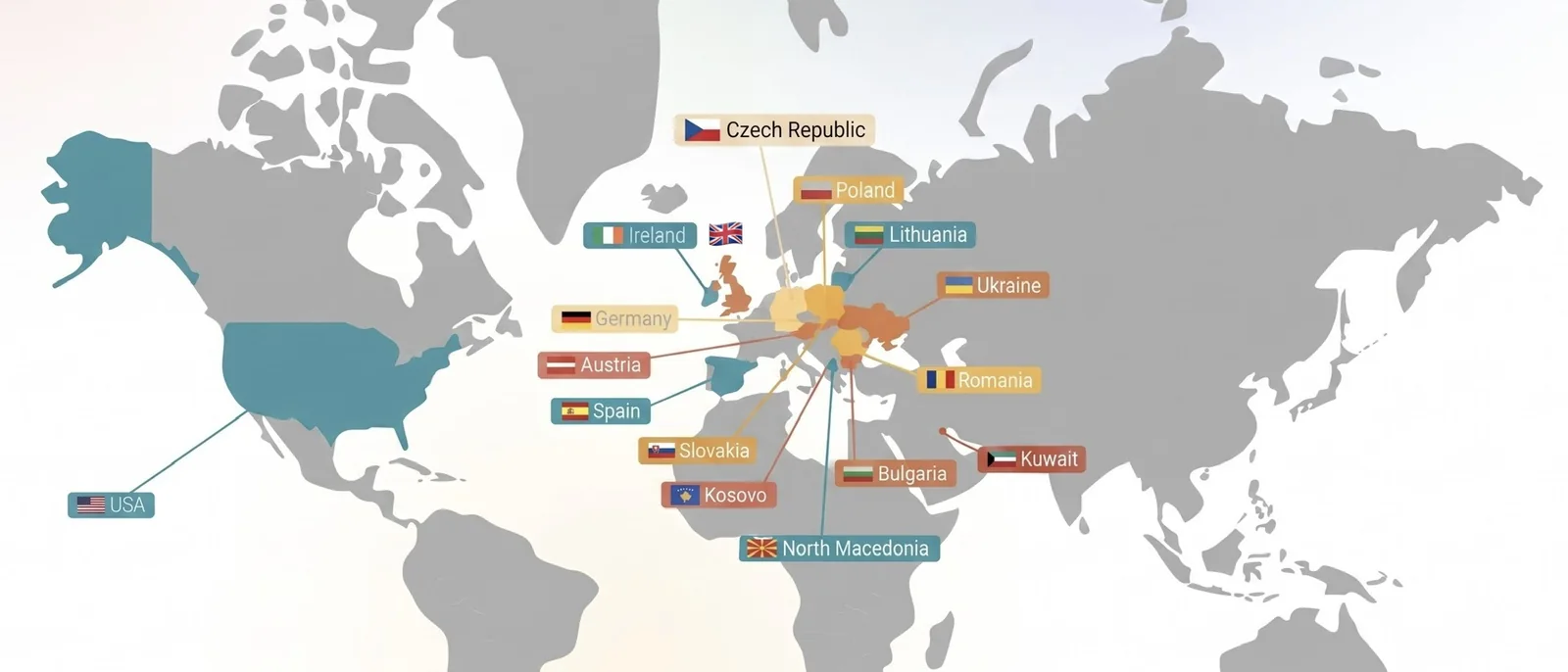
Official partner for the Czech RepublicAn internationally established methodology
At Smartup Academy, as an official partner of Abakus Europe, we teach using their established methodology, backed by over 10 years of experience. It is continuously developed to keep learning engaging, meaningful and enjoyable for new generations of children and parents.
We combine mental arithmetic with Brain Fitness exercises, logic puzzles and educational games to create an environment that supports well-rounded development.
And the results speak for themselves. According to a survey of parents, our programme helps children achieve:
Did you know?
Mental arithmetic isn’t just about maths. It’s a full-brain upgrade for your child.
Tired of homework battles and screen-induced distraction? At Smartup Academy, our method acts like a gym workout for your child’s developing mind, rewiring attention spans from the inside out:
Did you know most schoolwork only uses half the brain?
Traditional maths relies almost entirely on the logical left hemisphere. Our method triggers Whole-Brain Integration, engaging the analytical left side and creative right side simultaneously for balanced cognitive growth.
Did you know ages 5–12 are the “golden window” for brain growth?
During these years, your child’s Neuro-Plasticity is at its peak. Our training capitalises on this exact window to accelerate neural pathways and boost grey matter density when it matters most.
Did you know kids can calculate faster than a calculator by picturing beads in the air?
By moving from a physical abacus to Photographic Mental Imagery, students unlock extraordinary visual and auditory memory that helps them retain information effortlessly.

Did you know mental maths makes learning foreign languages easier?
By amplifying Executive Function (your child’s working memory and laser focus), the skills learned here spill over into excellence across reading, science and languages.
Did you know tactile movement helps calm restless minds?
Our structured sensory-motor tasks and kinesiological exercises naturally build Cognitive Resilience, training impulse control, reducing distractibility and supporting kids with ADHD or focus challenges.
Did you know we train the eyes and body, not just the mind?
Unlike rote tutoring, our Neuro-Pedagogical Advantage combines physical abacus work, speed visualisation, eye gymnastics and gamified daily routines into true brain fitness.
From the abacus to mental arithmetic
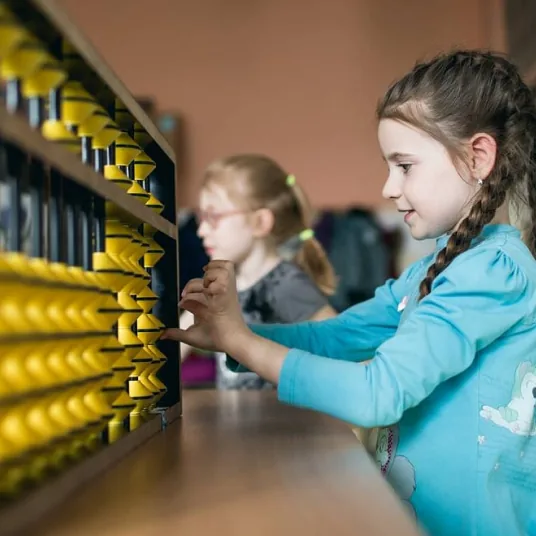
Children begin by using a physical abacus to learn the basic techniques. Gradually, they learn to visualise the abacus in their minds and perform calculations mentally, without any physical aids.
The abacus in their hands
Children learn to recognise numbers and understand their values, while practising basic mathematical operations on the abacus.
Counting on their fingers
They practise mathematical operations using finger techniques, this time without the abacus.
The abacus in their minds
Children visualise the abacus mentally and perform addition, subtraction, multiplication and division without physical aids, including calculations with multi-digit numbers.
What do our lessons look like?
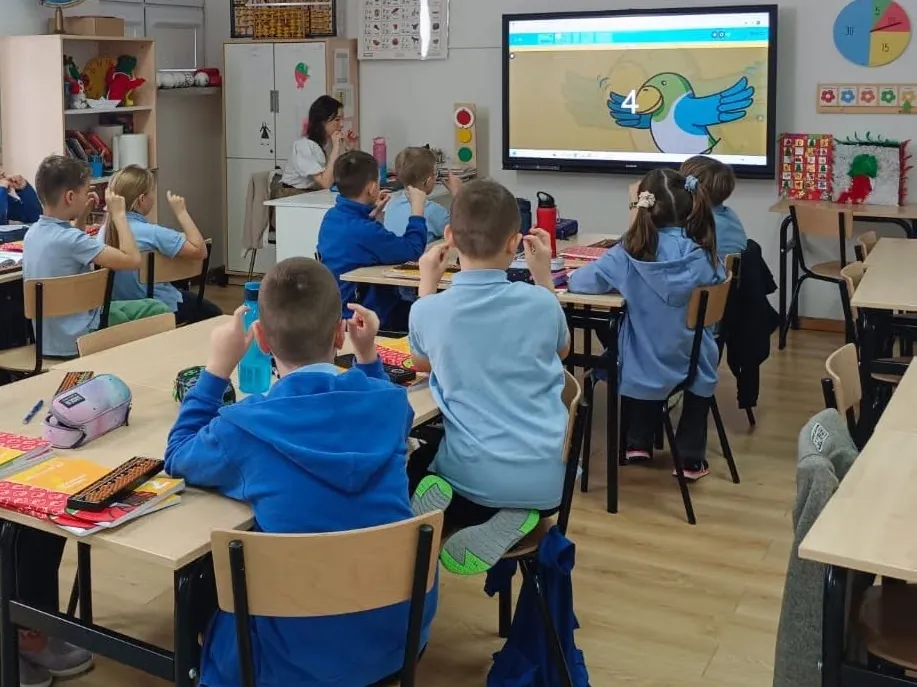
Learning, practice and play alternate throughout the lesson to help children maintain their attention and stay engaged.
- Welcome and warm-up
- Brain Fitness
- Revision of the previous topic
- Practice on our online platform
- Learning a new topic
- Eye exercises
- Kinesiological exercises
- Logic puzzles
- Educational games
- Goal setting

Where and how we teach
Abakus Curriculum
Our courses are designed for kids aged 4.5–15. Every child develops at their own pace, and progress depends on regular attendance, individual needs and consistent practice. First results can be achieved within 8 weeks.
-
Level0
Preparatory Level
1–9 -
Level1
Addition
5 + 7 + 11 + 3 + 17 + 2 + 13 -
Level2
Subtraction
97 − 11 − 5 − 13 − 7 − 19. -
Level3
Multiplication
13 × 7 or 29 × 5 -
Level4
Division
91 ÷ 7 or 187 ÷ 11 -
Levels5–7
Roots, Fractions, Negative Numbers, and Cubic Roots
What children learn at each level
Choose a level to see what children learn in it.
Level 0 – Preparatory Level
- Introduction to the abacus and how to use it.
- Introduction to numbers 1–9 and two-digit numbers, including how to represent them on the abacus
- Learning the correct hand position when working with the abacus.
- Development of fine motor skills, language skills, and coordination between both brain hemispheres.
- Strengthening concentration, attention, visual thinking, and photographic and auditory memory through picture cards.
- Development of mathematical skills, logical thinking, and spatial awareness.
- Practising quick reactions, observation skills, and mental agility.
- Encouraging a natural interest in mathematics and a joy of learning.
Level 1 – Addition (Single-Digit and Two-Digit Primes)
Calculating on the Abacus
- Addition using continuous combinations of single-digit numbers and two-digit prime numbers (e.g., 11, 13, 17, 19, 23).
- Example: 5 + 7 + 11 + 3 + 17 + 2 + 13.
- Improving finger dexterity and proficiency in using the abacus for continuous addition.
Mental Arithmetic
- Mental addition using single-digit numbers and two-digit primes.
- Developing concentration, attention, visual thinking, and memory.
Group Games and Brain Fitness Exercises
- Practising mathematical skills, logic, and spatial awareness.
- Developing quick reactions, attention, and observation skills.
- Encouraging motivation to learn.
Level 2 – Subtraction (Single-Digit and Two-Digit Primes)
Calculating on the Abacus
- Subtraction using combinations of single-digit numbers and two-digit prime numbers.
- Example: 97 − 11 − 5 − 13 − 7 − 19.
- Developing speed and accuracy when reducing values on the abacus.
Mental Arithmetic
- Mental subtraction calculations using single-digit numbers and two-digit primes.
- Further development of concentration, attention, visual thinking, and memory.
Group Games and Brain Fitness Exercises
- Practising mathematical skills, logic, and spatial awareness.
- Developing quick reactions and the ability to concentrate.
- Encouraging motivation to learn.
Level 3 – Multiplication (Single-Digit and Two-Digit Primes)
Calculating on the Abacus
- Introduction to multiplication tables and applying them on the abacus.
- Multiplication of two-digit prime numbers by single-digit prime numbers.
- Example: 13 × 7 or 29 × 5.
Mental Arithmetic
- Mental multiplication using single-digit numbers and two-digit primes.
- Further development of concentration, visual thinking, and photographic and auditory memory.
Group Games and Brain Fitness Exercises
- Developing mathematical skills, logical thinking, and spatial awareness.
- Practising quick reactions, attention, and concentration.
- Encouraging motivation to learn.
Level 4 – Division (Single-Digit and Two-Digit Primes)
Calculating on the Abacus
- Division involving single-digit numbers and two-digit prime numbers.
- Example: 91 ÷ 7 or 187 ÷ 11.
- Learning the correct abacus rules for placing quotients and remainders.
Mental Arithmetic
- Mental division calculations using single-digit numbers and two-digit primes.
- Developing visual thinking, photographic memory, and auditory memory for multi-step division.
Group Games and Brain Fitness Exercises
- Developing mathematical skills, logical thinking, and spatial awareness.
- Practising quick reactions, attention, and concentration.
- Encouraging motivation to learn.
Levels 5–7 – Roots, Fractions, Negative Numbers, and Cubic Roots
Calculating on the Abacus
- Operations with negative numbers, understanding how to represent deficits and borrow across zero on the abacus. (Example: 15 − 45 = −30).
- Addition, subtraction, multiplication, and division of fractions. (Example: 1/4 + 2/3).
- Advanced algorithms for extracting square roots directly on the abacus. (Example: √144 = 12).
- Extracting cubic roots using advanced abacus calculation methods. (Example: ³√343 = 7).
Mental Arithmetic
- Mental tracking of negative values and fractional equivalents.
- Mental estimation and exact calculation of square roots and cubic roots.
- Advanced development of visual thinking, handling complex multi-layered equations mentally.
Group Games and Brain Fitness Exercises
- Developing advanced mathematical skills, logical thinking, and spatial awareness.
- Practising quick reactions, attention, and concentration under increased cognitive load.
- Encouraging mastery and sustained motivation to learn.
Every level includes group games and Brain Fitness. Durations are approximate and follow the child's pace. At the trial lesson we recommend where to start.
Book a free trial lessonLearning materials and online practice
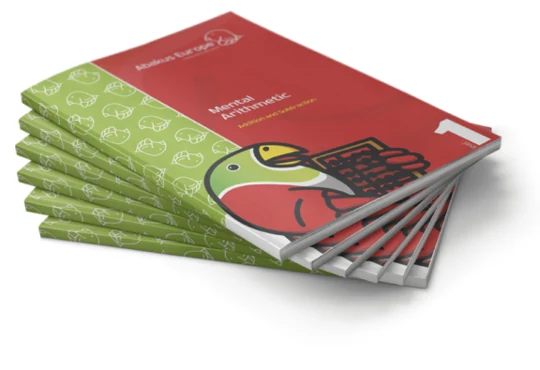
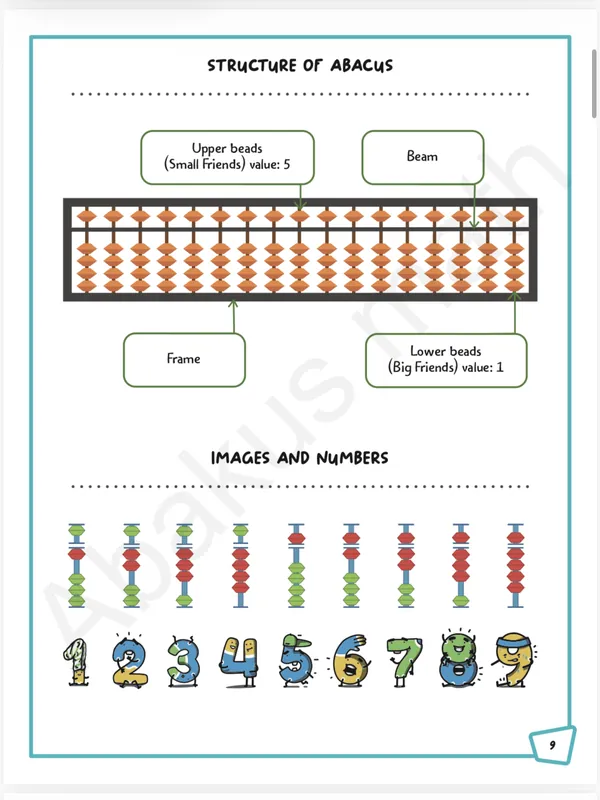
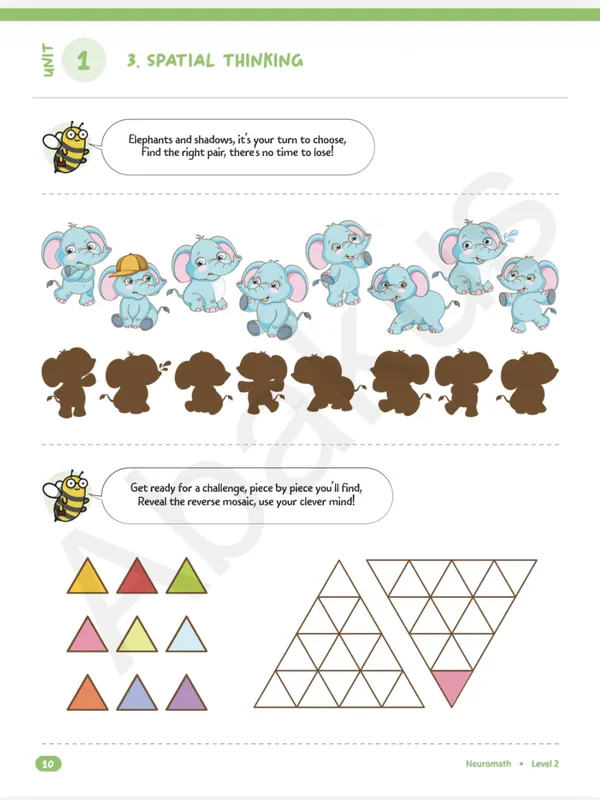
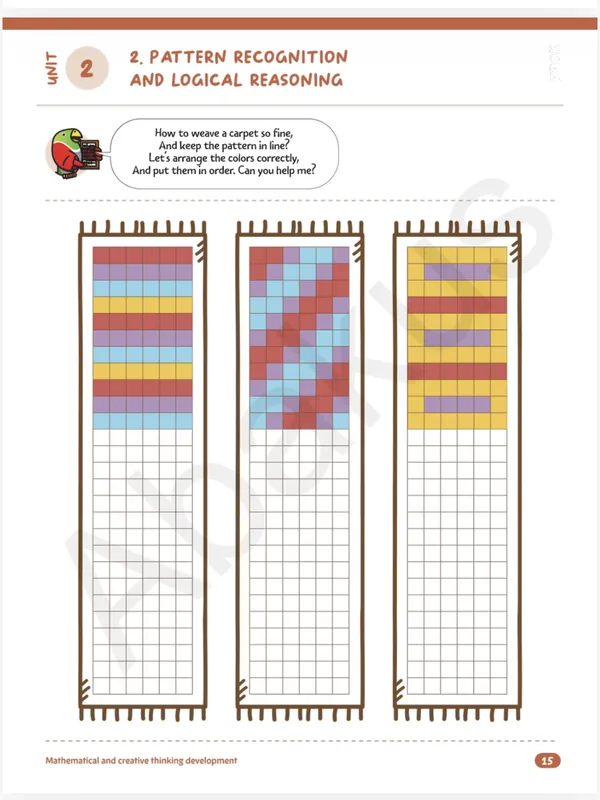
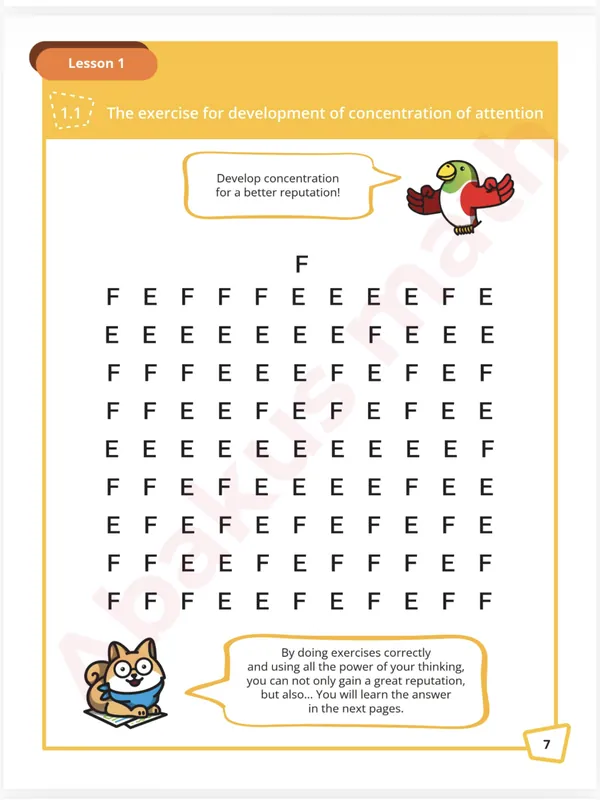
Each programme level has its own textbooks and workbooks, which children use during lessons. The programme also includes individual access to our online platform, where children can practise what they have learned, develop their skills and learn through a variety of interactive games.
Books


Online platform


Inside our lessons, international Olympiads and competitions
Students at Abakus centres achieve significant success in mental arithmetic competitions. International Olympiads give them the opportunity to demonstrate their knowledge, test their abilities and measure their skills against peers from around the world.
We prepare our students to participate in these competitions, where they gain valuable experience, create lasting memories and have the opportunity to make friends with children from different countries.
The Olympiads motivate children to continue developing their skills, strengthen their self-confidence and offer new challenges and opportunities. Our goal is to provide every child with quality teaching and support so they can reach their full potential and demonstrate what they have learned.



Videos




1-on-1 private sessions with the Academy Director
Executive Brain Gym (ages 25–55)
High-performance cognitive training for professionals and leaders
You go to the gym to keep your body resilient. What are you doing to train your mind? In a world of constant notifications, back-to-back meetings and digital fatigue, your brain rarely gets a true, restorative workout.
Led personally by our Director Ing. Anas Dallal (M.Sc. in ICT Engineering, with 17+ years of international project management and team leadership experience), this bespoke 1-on-1 training uses advanced abacus and mental arithmetic techniques to sharpen your cognitive edge and clear mental clutter.
Cut through digital brain fog: Step away from screens and engage in tactile, dual-hemisphere exercises that act as a “hard reset” for an overworked mind.
Sharpen executive function: Rebuild deep, unbroken focus, rapid information processing and working memory so you can navigate complex daily work challenges with ease.
Stress management through clarity: Tactile sensory-motor training demands 100% present-moment focus, quieting workplace anxiety and replacing mental fatigue with calm, decisive clarity.
Peer-to-peer mentorship: Train directly with a seasoned engineering and leadership veteran who understands the exact cognitive demands of modern professional life.
Frequently asked questions
Didn't find your answer? Write to us or give us a call.
What cognitive benefits do students gain from mental arithmetic?
Balanced dual-hemisphere integration: Children develop in a complex, harmonious way by activating both the logical (left) and creative (right) brain hemispheres at the same time.
Neuro-cognitive mastery: Students build extraordinary working memory, razor-sharp focus and advanced logical reasoning.
Academic synergy: Preschoolers build neural foundations for numeracy and spatial awareness, while school-age students see better results across all subjects, including foreign languages, thanks to faster information processing.
What is the best age to start?
Ideally between the ages of 5 and 7. The brain develops most intensively up to the age of 12. The preparatory level is for preschoolers from 4.5 years. Children can also start later; progress is just a little slower.
Why is the 5-to-12 age window critical for this training?
Neural plasticity peak: A child’s brain undergoes its most intensive structural development up to age 12, with maximum neural plasticity: the brain’s ability to adapt and map new connections.
Early foundation advantage: Tactile abacus training during these formative years accelerates the myelination of neural fibres, permanently boosting processing speed and intellectual capacity.
Will it interfere with school maths?
Complementary neural architecture: Rather than conflicting with Czech school methods, the programme teaches children to map abstract numbers to vivid visual images, creating an alternative processing route that strengthens mathematical intuition without confusion in class.
How does this neuroscience-backed method differ from standard tutoring?
Brain fitness vs rote learning: Standard tutoring focuses only on homework. Our neuro-pedagogical approach works like an intensive gym workout for the brain, building cognitive stamina and structural neural pathways.
High-return daily stimulation: Just 15–20 minutes of daily practice on our interactive Abakus portal triggers powerful neuroplastic changes, fostering self-reliance, faster learning and lifelong cognitive agility.
Can this programme help children with focus issues, distractibility or ADHD?
Attention span expansion: The dynamic, multi-sensory lessons combine auditory, visual and motor skills and actively train executive functions in the prefrontal cortex.
Impulse regulation and focus: By alternating rapid calculation with brain-gym coordination puzzles and eye gymnastics, children naturally learn to anchor their attention, resist distractions and sustain deep concentration.
Won't children get bored in a long lesson?
Calculation alternates with puzzles, games and movement, and there is a break every 30 minutes. A lesson lasts 60 or 90 minutes.
Which brain processes are activated during a lesson?
Multi-sensory engagement: Children cannot sustain focus on a single task for hours, so our 10-step lessons rotate between finger and abacus work (tactile-motor), speed visualisation (visuospatial) and logic puzzles (executive processing).
Dopamine-driven engagement: Gamified exercises and interactive media keep engagement high and release positive neurochemicals that consolidate learning and prevent cognitive fatigue.
How long does the course take?
Each stage takes approximately 9 months. Level 0 (Preparatory) takes around 9 months, followed by Levels 1 and 2 (Addition and Subtraction), which are studied together over approximately 9 months. Levels 3 and 4 (Multiplication and Division) are also studied together over approximately 9 months. The actual duration may vary depending on your child’s age, abilities, and learning pace. After the trial lesson, we’ll recommend the most suitable starting level for your child.
Is there homework?
Yes, regular practice has a big impact on results. We recommend 15–20 minutes a day on the abacus, mentally and on the online platform.
Can children take part in competitions?
Yes. The course prepares students for the international Abakus Olympiad and PAMA Global, and children who enjoy it can continue with competition levels 6–10 after the course.
Can adults use the method too?
Yes! In fact, we offer a dedicated 1-on-1 Executive Brain Gym (ages 25–55) led personally by our Smartup Academy Director (M.Sc. in ICT Engineering, 17+ years in international leadership). It’s designed specifically for busy professionals to combat digital fatigue, sharpen working memory and handle high-pressure daily challenges with calm clarity.
How much does the course cost?
The price depends on the format and lesson length you choose. We will send you the current price list together with your trial lesson date and are happy to go through it at the lesson.
How do you handle personal data?
We use the details from your registration only to arrange the trial lesson and classes. We never sell them. See our privacy policy for details.
Come try a free trial lesson at our Brno centre
Find out if our approach is the right fit for your child, completely free and with no commitment.
Getting to know your child
We discover what your child already knows.
Learning through play
Your child explores our method through fun activities.
Try the abacus
Your child tries a few simple calculations on the abacus and learns some tricks.
Personalised recommendation
We assist and recommend the level that suits your child best.
Thank you, we have your registration
We will get back to you with a date.
Contact
Learning centre
Centrum Vídeňská
Vídeňská 815/89A
639 00 Brno
Phone and email
- +420 770 635 825
- +420 776 684 956 (English speaking)
- info@smartup-academy.cz
Company details
Smartup Academy s.r.o.
Příkop 843/4, Zábrdovice, 602 00 Brno
Company ID 30052190
Follow us
How to find us?
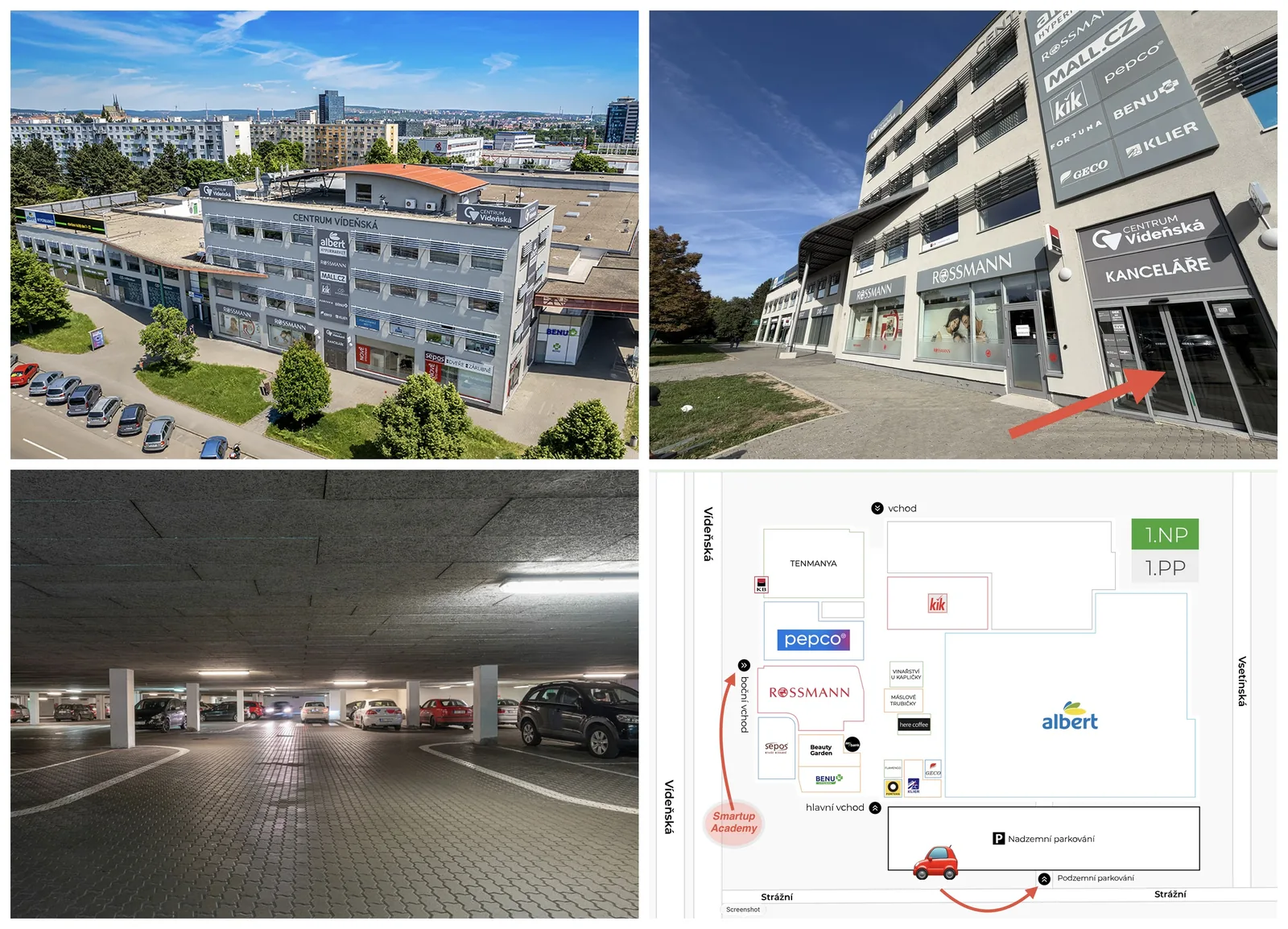
You can find us at Centrum Vídeňská. Please use the side entrance from Vídeňská Street and ring the doorbell.
Parking.
You can park in either the outdoor car park or the underground garage. The first 2 hours of parking are free of charge.